As America marks its 250th birthday, communities across the country are celebrating in a wide range of ways—from museum exhibits and local programs to statewide commemorations led by America250 commissions.
Fifty years ago, the nation’s Bicentennial looked very different.
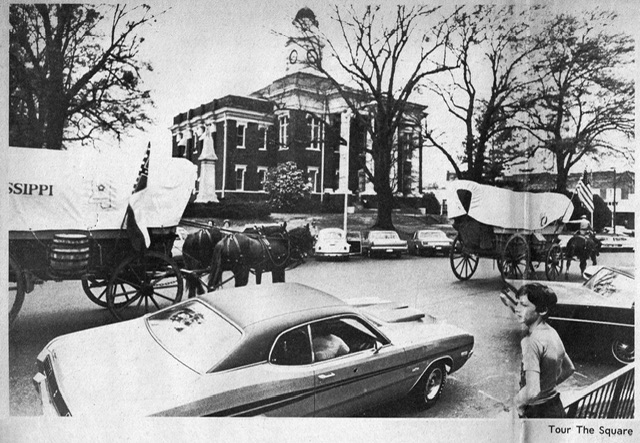
In 1976, one of the most unique celebrations was a cross-country procession known as the Bicentennial Wagon Train Pilgrimage to Pennsylvania, which passed through Kosciusko on March 20, 1976, as part of its journey toward Valley Forge.
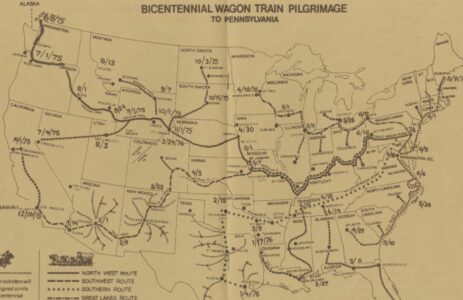
Rather than a single centralized event, the Wagon Train was designed as a traveling celebration. Multiple wagon routes crossed the United States, stopping in towns and cities along the way to engage local communities in the Bicentennial observance.
According to the official Wagon Train program, the nationwide pilgrimage was intended to symbolize America’s westward expansion, but in reverse.
Instead of pioneers traveling west in search of opportunity, the wagons headed east “back to the Cradle of Liberty” as a pilgrimage to the nation’s birthplace. Their mission was to reconnect communities with the ideals of liberty, justice and freedom that inspired the country’s founding.
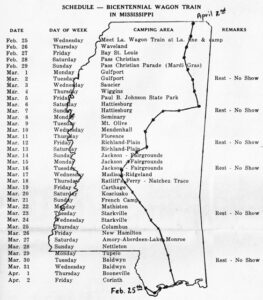
The Mississippi route began at the Louisiana state line on Feb. 25, 1976, and traveled for more than five weeks through communities including Gulfport, Hattiesburg, Jackson, Kosciusko, Starkville, Tupelo and Corinth before continuing into Tennessee on April 2.
Along the way, towns hosted welcoming ceremonies, community gatherings and local Bicentennial observances as the wagons passed through. Mounted “outriders” also collected commemorative scrolls signed by residents of official Bicentennial communities, carrying them to Valley Forge where they would become part of the national celebration.
One of the most memorable stops for Kosciusko is preserved in pictures and audio recordings from that evening, capturing portions of the community program and closing remarks as residents took part in the celebration.
The recordings (Listen HERE) are part of a collection shared by Earl Reinhalter through a Facebook group dedicated to preserving memories of the 1976 Wagon Train Pilgrimage.
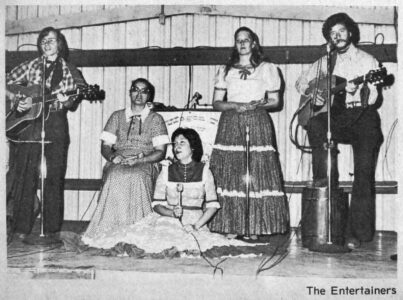
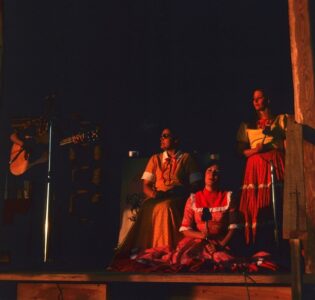
Left to Right: Earl Reinhalter, Shelly Newman, Janie Gioffre, Deneille Lilley and Larry Biren. (Courtesy: Earl Reinhalter)
Unlike today’s America250 observances, which are largely coordinated through state commissions, historical organizations and local planning groups, the 1976 Bicentennial was often experienced as a moving, shared national event that physically connected communities across the country.
Mississippi’s America250 Commission, established in 2025, is helping guide statewide programming for the 250th anniversary, with an emphasis on education, preservation and local history initiatives.
While the format has changed, the purpose remains familiar: encouraging reflection on the nation’s history and the communities that have shaped it.
For Kosciusko, that history includes a March evening in 1976 when covered wagons rolled through town on their way to Valley Forge—carrying with them a nationwide celebration of America’s 200th birthday.
Special thanks to Earl Reinhalter for sharing and preserving the historical photos, recordings, and documents that made this story possible. More images from Wagon Train stops in Carthage and French Camp are included below.
French Camp photos:
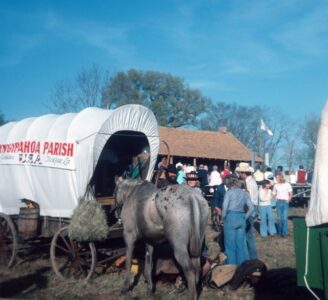
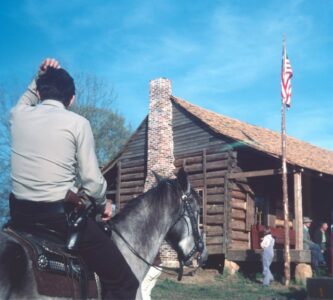
Covered wagons from the Bicentennial Wagon Train Pilgrimage stopped in French Camp on March 21, 1976, one day after visiting Kosciusko. (Courtesy: Earl Reinhalter)
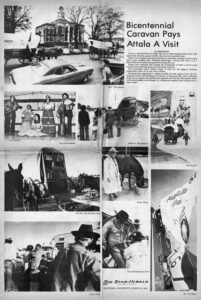
Newspaper clipping:
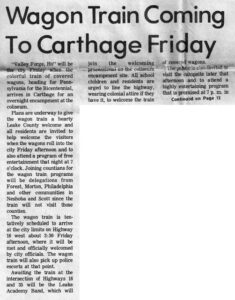
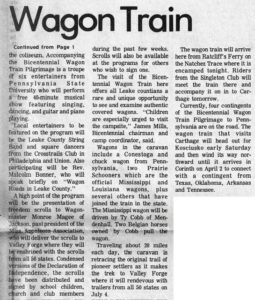
A newspaper clipping documents the Wagon Train’s stop in Carthage before it continued to Kosciusko in March 1976. (Courtesy: Earl Reinhalter)